
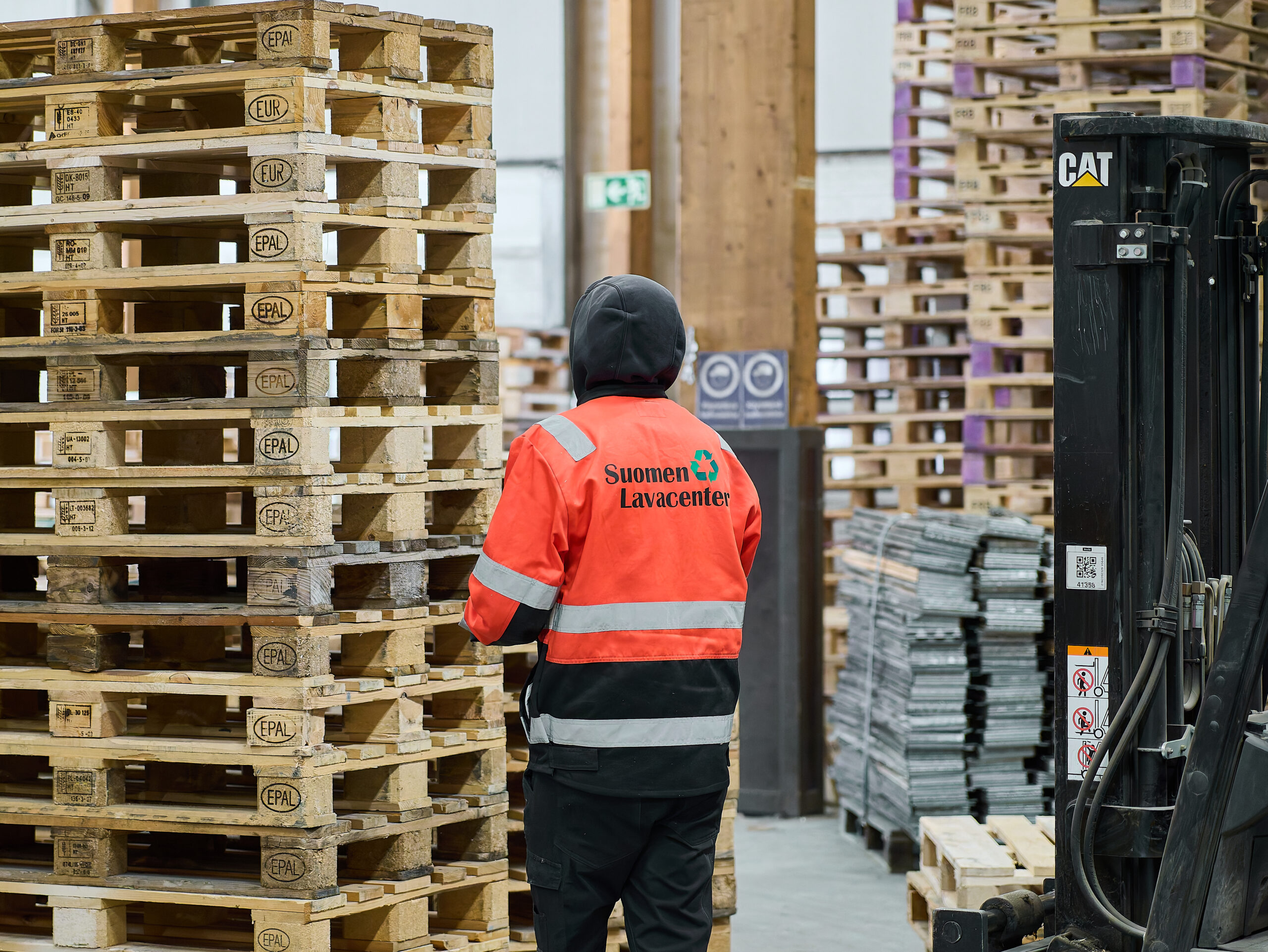
Pallets build up without anyone noticing. Goods arrive on pallets, the pallets stay behind, and at some point there is a stack in the corner of the yard or at the back of the warehouse that takes up space and that nobody has time to deal with. Surplus pallets are not waste, though: they still have value. This guide explains how to sell surplus pallets: which pallets can be sold, what determines their price, how to get a better price for them and how the sale and collection work in practice.
We buy used pallets and pallet collars from companies every day and collect them with our own trucks. This guide is based on what we have seen on collection runs: what makes a deal go smoothly, what slows it down and where sellers most often leave money on the table.
Why it pays to sell surplus pallets
A company has three ways to get rid of surplus pallets. The difference between them is not just money, but also the amount of work involved and what ultimately happens to the pallets.
| Option | Cost impact | Work for you | When it makes sense |
|---|---|---|---|
| Disposal as waste | Costs money: a waste fee, often with transport on top | You load them and order the transport yourselves | In practice only when the pallet is completely ruined |
| Taking them to recycling | Usually nothing, sometimes a small fee | Transport with your own vehicles | When the quantity is small and the distance short |
| Selling to a pallet supplier | Earns money: you get paid for the pallets | Minimal, collection is agreed in advance | When the pallets are standard sizes and there is a pile of them |
So disposal and selling pull in opposite directions. Disposal is a cost, selling is income, and on top of that there is the working time spent carting the pallets away. When pallets build up regularly, this difference starts to show over a year.
The second, often underestimated benefit is space. A stack of pallets takes up square metres that you pay rent for or that could be used for production and storage. A stack lying around the yard is also a safety risk and makes a poor impression on customers. More on this in the article on pallet storage and stacking.
Key point: intact and repairable standard pallets should almost always be sold rather than disposed of. Disposal costs money, selling earns money, and either way the pallets have to be moved out.
Which pallets can be sold
The short answer: standard-size wooden pallets that are intact or repairable. Below is a more detailed breakdown by pallet type.
| Pallet type | Dimensions (mm) | Demand | Condition required |
|---|---|---|---|
| EUR pallet (EPAL) | 800 × 1200 | The highest and most stable | Intact or repairable, markings legible |
| FIN pallet | 1000 × 1200 | High, common in Finland | Intact or repairable |
| Half pallet | 600 × 800 and other standard sizes | Moderate | Intact, solid structure |
| One-way pallet | 800 × 1200 or 1000 × 1200 | Varies, depends on the batch | Lightweight construction, must not be cracked all over |
| Pallet collars | EUR, FIN and half pallet sizes | Good and steady | Hinges intact, boards straight |
We buy standard-size used EUR, FIN, one-way and half pallets as well as used pallet collars. Mention pallet collars separately when you request a quote, because they are handled and priced separately from pallets. Read more on the we buy pallet collars page.
IPPC and ISPM 15 marking
The products we buy must comply with the official IPPC and ISPM 15 standard, which means the pallet must carry a marking showing that it has been heat-treated. The marking is burnt into a block of the pallet and shows the country code, the producer’s registration number and the treatment method. This is not a formality but a requirement for the pallet to stay in circulation, including in export shipments.
If you are not sure what the side of the pallet says, read how to identify a genuine EUR pallet and heat-treated pallets and ISPM 15. In practice it is enough to send us a photo of a couple of pallets, and we will check the marking for you.
What about broken pallets?
A repairable pallet is not the same as a ruined one. One split deck board or a loose nail does not make a pallet worthless, because pallets like this are repaired and put back into use. A pallet whose blocks are broken or whose structure has failed throughout, on the other hand, will not go back into circulation.
A practical tip: do not sort out the broken ones yourself before you have asked. Many companies have thrown away pallets they would have been paid for. The article can you sell broken pallets explains in more detail where the line is drawn.
Which pallets are not accepted
To be honest, not everything is accepted. It is worth knowing these in advance so that there are no surprises on collection day:
- Wet, mouldy or badly soiled pallets. Mould and moisture damage cannot be repaired, and a spoiled pallet can spoil the others in the stack.
- Pallets soaked in chemicals or oil. They cannot go back into food or consumer goods circulation.
- Painted or coated pallets. The markings cannot be read and the condition cannot be verified.
- Plastic and metal pallets. They circulate through a different route from wooden pallets.
- Custom-size and customer-specific pallets. There is no second-hand market for them, because they were made for a single use.
If a batch has acceptable and unacceptable pallets mixed together, that is not a problem. We then agree what we buy and what we take away on the same collection, so that the whole pile goes in one go and you are not left with anything to deal with.
What determines the price of a used pallet
The price paid for a used pallet is not one fixed figure: it is made up of six factors. Once you know them, you can judge for yourself whether an offer is reasonable and what you can influence.
- Pallet type. EUR and FIN pallets have the widest second-hand market, so they fetch the most. A one-way pallet is worth clearly less, because it has a lightweight construction.
- Condition. An intact pallet goes straight back out, a repairable one needs an extra work step. The difference shows in the price. The grades are explained in the article pallet grades A, B and C.
- Quantity. Ten pallets and a thousand pallets are different deals. In a bigger batch, the collection cost is spread over more pallets, which shows in the price per pallet.
- Sorting. A batch that is already sorted by type and neatly stacked is quicker to handle than a mixed pile. This is the factor the seller can influence most.
- Location and accessibility. The distance from Hyvinkää matters, as does whether the truck can reach the loading point and whether the pallets can be lifted with a forklift.
- Timing. Demand for pallets varies over the year with the seasons and the order books of industry. At peak demand, pallets fetch more than during quiet periods.
Why don’t we list prices in euros on this page? Because just one of the variables in the list above can put the price in a different bracket, and a ballpark figure would usually be misleading. Tell us the quantity, the type and the rough condition, and you will get the real figure the same or the next working day. The article pallet price covers the price level of new and used pallets more generally.
How to get a better price for your pallets
These four things have the biggest effect on what a batch fetches. None of them takes much work on your part if you take care of them as the pallets build up.
1. Sort by type, not by condition
Separate EUR pallets, FIN pallets and collars into their own stacks. Do not start assessing the condition yourself, though: that is our job, and as noted above, a repairable pallet is worth money. Sorting the wrong way takes up your time and can lower the value of the batch.
2. Stack neatly and to an even height
Straight stacks of even height are quick to load, and you can see the quantity at a glance. The rule of thumb is about 15-20 pallets per stack, which keeps the stack stable and possible to handle with a forklift. A toppled or leaning stack slows down collection and can damage the pallets.
3. Protect the pallets from the weather
This is by far the most common reason a pallet’s value collapses. A month out in the rain turns an intact pallet into a moisture-damaged one, and the moisture does not go away. A shelter or a cover is enough. If the pallets are outdoors, arrange collection sooner rather than waiting for a bigger pile.
4. Build up a decent batch, but not for too long
A bigger batch is worth more per pallet, because it is collected in one go. There is a balance, though: if the pallets wait outdoors for months, the value lost to the weather is greater than the benefit of a bigger batch. In practice, it is best to arrange collection when the pile is a reasonable size and the pallets are still in good condition. The article how many pallets fit in a truck or container explains how many pallets make a full load.
How the sale works in practice
The whole process usually takes the seller only a few minutes of work. This is how it goes:
- Make a rough count of what you have. A rough estimate is enough: pallet type, approximate quantity and whether there are pallet collars among them. No exact inventory is needed.
- Get in touch. Call, send an email or fill in the quote request form. A phone photo of the stack speeds up the estimate more than a long explanation.
- Receive a quote. We tell you what we will pay for the pallets and when we can collect them. The quote is free and non-binding.
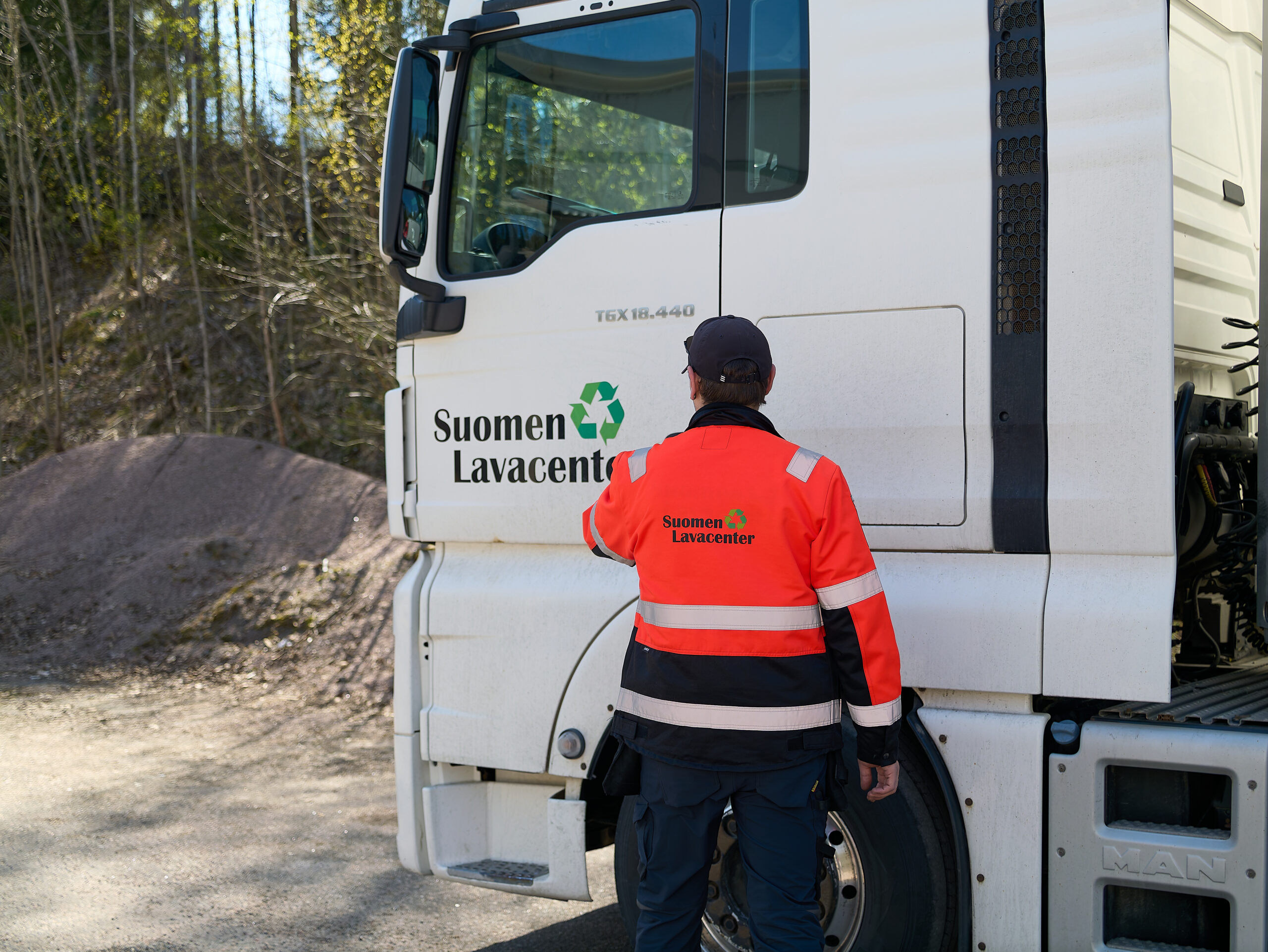
- Agree on collection. We come on the agreed day with our own trucks from Hyvinkää. You can also bring the pallets directly to our warehouse by arrangement.
- Loading and payment. We load the pallets ourselves, so you do not need to assign anyone to the job. The quantity is checked together and the deal is settled as agreed.
How to prepare the pallets for collection
A few practical points that speed up collection and are worth thinking about before the truck arrives:
- Stacks as close as possible to where the truck can stop.
- A clear route around the stacks for a forklift or a hand pallet truck.
- Stacks of the same height and type, so that the quantity is easy to check.
- Who will be on site at collection time and which door to use.
- If the area is locked or the gate has a code, let us know in advance.
One-off batch or regular pallet collection
If pallets build up regularly, a one-off sale is not the best way to handle it. In that case it is worth agreeing on regular collection, so that the pallets are picked up at agreed intervals and nobody has to remember to order a collection separately.
| One-off batch | Regular collection | |
|---|---|---|
| When it makes sense | An accumulated pile, a move, clearing out a warehouse | Pallets come in at a steady rate |
| Work for you | Getting in touch every time | Agreed once, automatic after that |
| Use of space | The pile has time to grow large | The stack stays under control |
| Pallet condition | Varies, some pallets suffer from the weather | More even, because the pallets do not stand for long |
Regular collection is practically always the better option for a company with a constant flow of incoming goods. It keeps the pallets in better condition, which also shows in what they fetch.
Sell them yourself or to a pallet supplier?
In principle, you can also sell surplus pallets yourself, for example on online marketplaces or to your own contacts. That is a reasonable option when you have only a few pallets and time to spare. For larger batches, the calculation usually goes the other way.
| Selling yourself | Selling to a pallet supplier | |
|---|---|---|
| Price per pallet | Can be higher for individual pallets | Steady, and a large batch raises the price per pallet |
| Your workload | Listing, answering enquiries, making arrangements, supervising | One contact |
| Collection and loading | Up to the buyer, often you do the loading | Handled for you |
| Clearing the whole batch | The best pallets go, the rest stay in the yard | The whole pile goes in one go |
| Invoicing | You handle it yourself, the buyer is often a private individual | A normal business-to-business sale |
| Recurrence | The same work from scratch every time | Agreed once, continues automatically |
The practical answer is this: if you have tens or hundreds of pallets and they keep building up, selling them yourself costs more in working time than it brings in as a price difference. And the problem remains that the best pallets go first and the worst ones are left in the yard waiting to be disposed of. If you have paid your supplier a deposit for the pallets, the article EUR pallet return and pallet deposit shows when returning them makes sense and when selling does.
How to estimate how many surplus pallets you build up
Many people put off getting in touch because they do not know the exact quantity. You do not need an exact figure, but a rough estimate helps you get the right quote straight away. There are two ways to estimate it.
Count the stacks. A normal stack holds 15-20 pallets. Count the stacks and multiply by 15, and you will be close enough. If the stacks are different heights, count the tallest and the lowest and use the average.
Work it out from incoming goods. If you know roughly how many pallet loads of goods arrive each week and what share of the pallets stay with you, you get the weekly accumulation. Multiply that by the number of weeks since the last collection. This method works particularly well when you are considering regular collection, because it also tells you a suitable collection interval.
A rough rule of thumb: one full trailer load typically holds several hundred stacked pallets, so a batch of a few dozen pallets does not yet fill the truck. That does not stop a deal, but it explains why the price per pallet is better in a bigger batch. More detailed load calculations are in the article how many pallets fit in a truck or container.
Seasonal variation: when pallets fetch the best price
Demand for used pallets follows the order books of industry and retail. Demand is typically strongest when production and deliveries are running at full speed, and calmer during holiday periods and around the turn of the year. That does not mean pallets are not bought all year round, just that the price level moves somewhat.
It is not worth trying to time this too precisely. The benefit of timing is small compared with what poor storage costs you: a couple of months in the rain takes more value from a pallet than the best possible timing brings. If the pallets are under a shelter and you can wait, ask for a price every couple of months. If they are outdoors, sell straight away.
The most common mistakes when selling pallets
- Pallets stand outdoors too long. By far the most expensive mistake. Moisture damage cannot be repaired, and the value drops month by month.
- Broken pallets are thrown away in advance. Repairable ones are paid for. Ask before you sort.
- Waiting for the perfect moment. The batch grows, but at the same time the oldest pallets deteriorate. A reasonable batch now is better than a big batch in six months.
- Pallet collars are not mentioned. They are handled separately, and if you do not mention them, they may be left behind in the yard.
- Restrictions at the collection site are not mentioned. A cramped yard or a missing forklift is best sorted out in advance, not when the truck is already in the yard.
When it is not worth selling pallets
Selling is not the right answer in every situation, and it is only fair to say so:
If you will need pallets yourselves soon, selling them and buying new ones is a roundabout way of doing things. In that case, think instead about whether your own pallet circulation is enough or whether it would make sense to top it up with used pallets. And if you only have a few pallets and are far away, the collection cost can eat up the value of the deal. In that case it is better to wait for a bigger batch or to bring the pallets to our warehouse when you are driving this way anyway.
The third situation is custom-size and customer-specific pallets, for which there is no second-hand market. They belong in recycling, which is covered in the article pallet recycling.
Selling pallets in a nutshell
- Accepted: standard-size EUR, FIN, one-way and half pallets as well as pallet collars, intact or repairable, with the IPPC and ISPM 15 marking.
- What affects the price: pallet type, condition, quantity, sorting, location and timing.
- What you can influence most: protecting the pallets from the weather, sorting them by type and stacking them neatly.
- The process: estimate, contact, quote, collection, payment. The work for you is minimal.
- Regular need: agree on regular collection, so that the pallets do not have time to deteriorate and nobody has to remember to order it.
Why sell your pallets to Suomen Lavacenter
Buying pallets is everyday work for us: we buy used pallets and pallet collars mainly from companies and handle collection with our own trucks from Hyvinkää. The condition is checked before purchase, and refurbished pallets go back into use in our range. See the we buy pallets page for more details.
- Our own warehouse and trucks. We are not a middleman, so schedules hold and collection does not wait for an outside haulier.
- Mixed batches are fine. The whole pile goes in one go, including the part we do not buy.
- No strict minimum quantity. We agree on a sensible arrangement case by case.
- The same contact person. Someone you already know handles it next time too.
- We buy as well as sell. The same partner handles both directions, which keeps your pallet flow in one place.
Summary
Surplus pallets are rarely waste. Standard-size EUR, FIN, one-way and half pallets as well as pallet collars can be sold when they are intact or repairable, and the price depends on pallet type, condition, quantity and how easy they are to collect. The single biggest thing the seller can influence is protection from the weather: a dry pallet is worth money, a soaked one is not.
In practice, the best approach is not to build up a pile for months but to arrange collection when you have a reasonable number of pallets and they are still in good condition. If your flow of goods is constant, regular collection solves the issue for good.
Do you have surplus pallets building up?
Tell us what you have, and we will agree on collection and price. The quote is free.


