
CP pallets are standard pallets used in the chemical and plastics industry, with precisely defined dimensions, construction and markings. They are used, for example, to transport chemicals and plastic raw materials in sacks, big bags, octabins and drums. Suomen Lavacenter supplies CP1, CP3 and CP9 pallets for your company’s needs. Tell us the type and quantity you need, and we will let you know the availability and price.
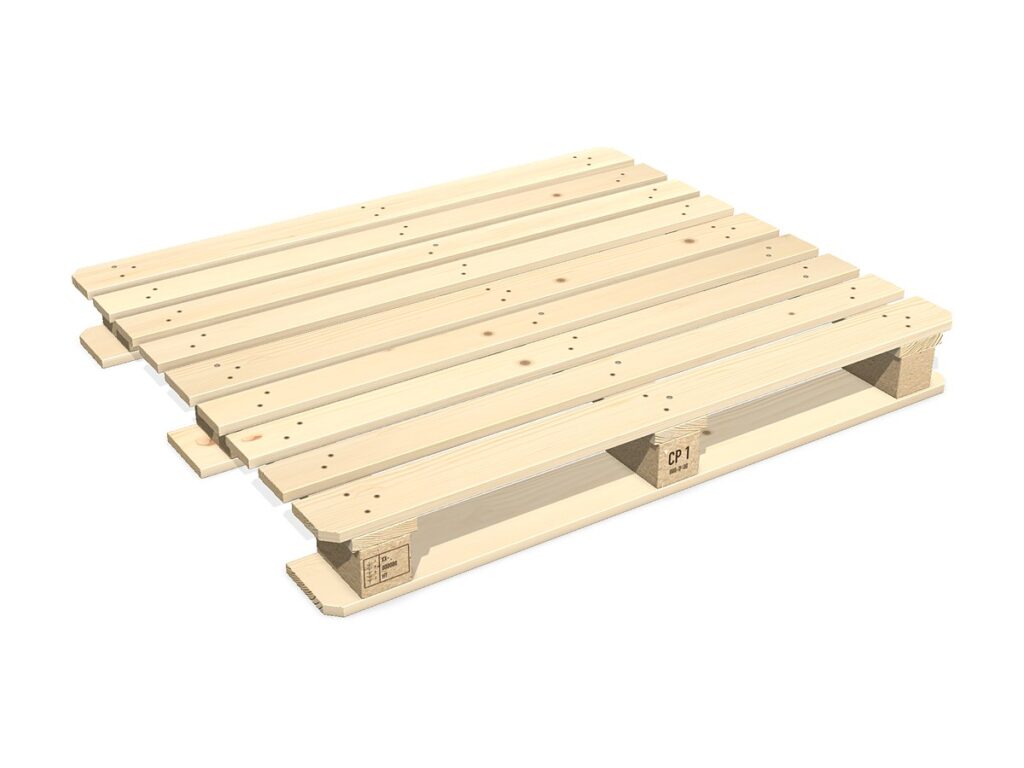
CP1 pallet 1000 x 1200 mm
CP1 is designed for sacks, cardboard boxes and big bags. It is the same size as a FIN pallet, but it is built to the CP specification and carries the CP marking, so a FIN pallet cannot be used in its place.
- Size 1000 x 1200 mm
- Height 138 mm
- Weight approx. 23 kg
- Load capacity approx. 1500 kg
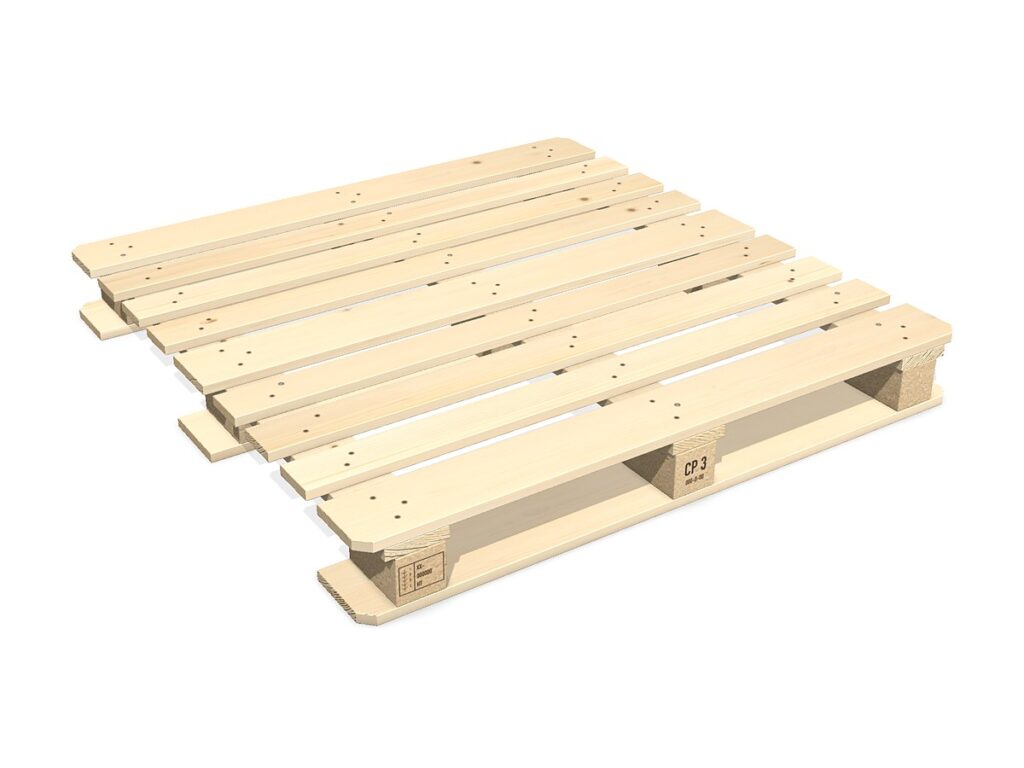
CP3 pallet 1140 x 1140 mm
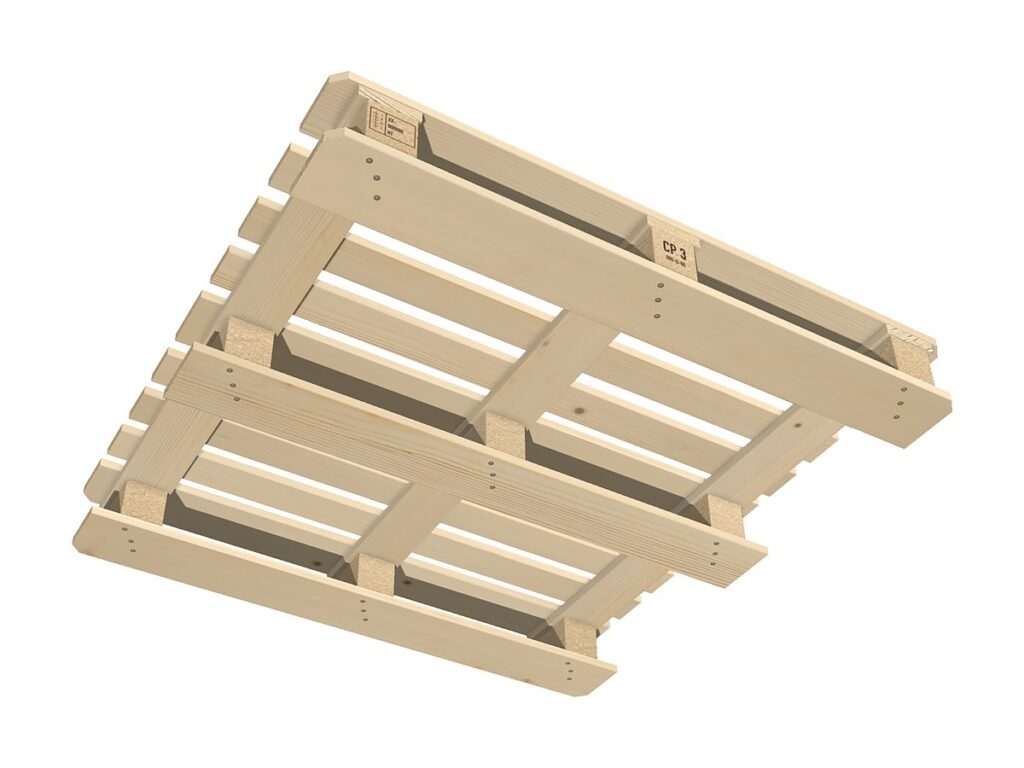
CP3 is a square pallet for drums, big bags and octabins. It has three runners underneath, and its square shape fits a shipping container in rows of two pallets.
- Size 1140 x 1140 mm
- Height 138 mm
- Weight approx. 25 kg
- Load capacity approx. 1000 kg
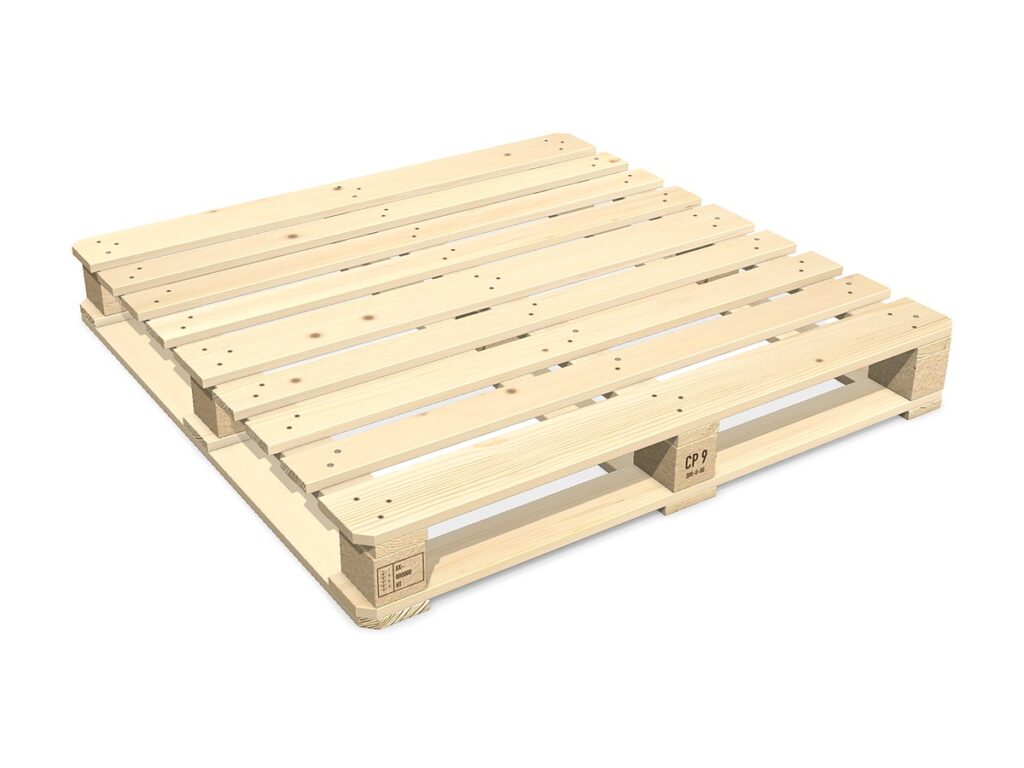
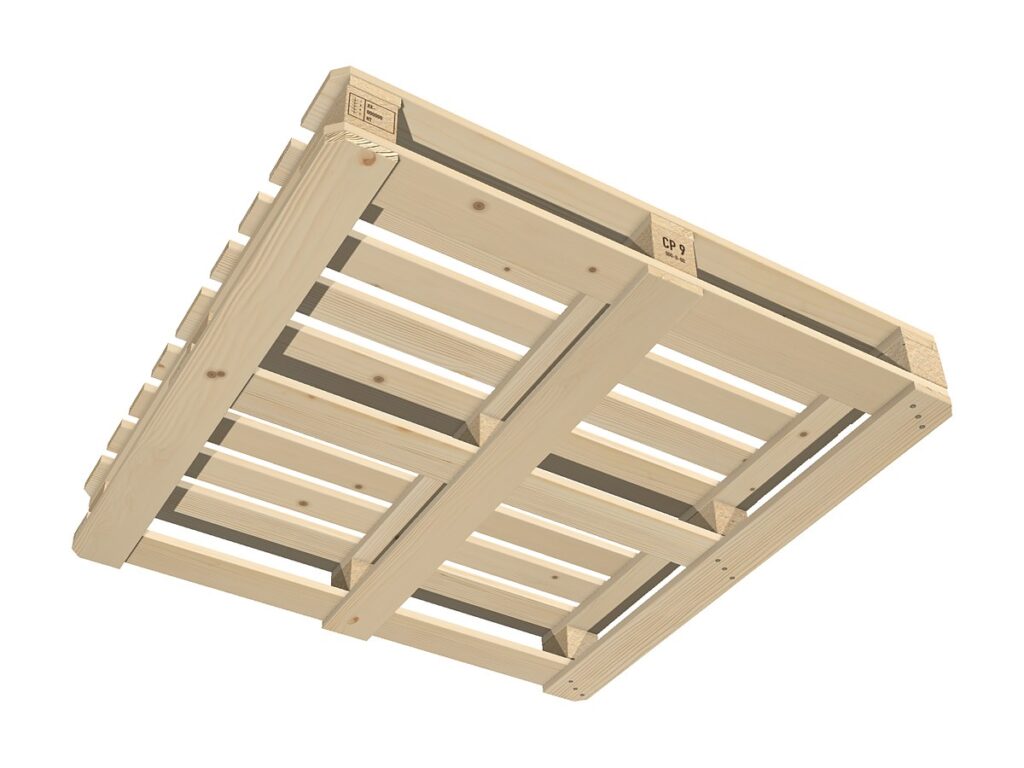
CP9 pallet 1140 x 1140 mm
CP9 is the same size as CP3 and intended for the same loads, but it has bottom boards running in both directions. The construction is stiffer, so CP9 is better suited than CP3 to heavy big bags and racking storage.
- Size 1140 x 1140 mm
- Height 156 mm
- Weight approx. 25 kg
- Load capacity approx. 1500 kg
The images are dimensionally accurate illustrations based on the construction drawings in the CP specification (edition 7).
CP pallet dimensions, weight and load capacity
| CP1 | CP3 | CP9 | |
|---|---|---|---|
| Dimensions | 1000 x 1200 mm | 1140 x 1140 mm | 1140 x 1140 mm |
| Height | 138 mm | 138 mm | 156 mm |
| Base | 3 runners | 3 runners | Boards in both directions |
| Weight | approx. 23 kg | approx. 25 kg | approx. 25 kg |
| Load capacity | approx. 1500 kg | approx. 1000 kg | approx. 1500 kg |
| Use | Sacks, cardboard boxes, big bags | Drums, big bags, octabins | Drums, big bags, octabins |
Weight and load capacity are guide values stated by manufacturers. Load capacity always depends on the condition of the pallet and on how the load is distributed on it.
What do the load capacities mean?
- Load capacity: the figure given in the table. It tells you how heavy a load the pallet can carry while being moved with a forklift or a pallet truck.
- On the floor: standing still on a level floor, with the weight spread over the whole pallet, the pallet can take more than the stated load capacity.
- In racking: when the pallet sits in a pallet rack supported by only two beams, it has to carry the load between the beams and can take less than the stated load capacity.
The different types of load capacity are explained in more detail in the article pallet load capacity in practice.
CP pallets in pallet racking
Racking is the most demanding use for a pallet, because the load sits between the beams without support. According to the CP specification, the pallet is at its weakest when the rack beams run parallel to the deck boards. So place the pallet in the rack with the deck boards spanning across the beams.
- For heavy loads, use pallet supports or mesh decking in the racking so that the pallet does not carry the load on its own.
- In the racking test in the CP specification, CP9 withstands almost twice as much as CP3, so it is the safer choice for heavy big bags in racking.
- Always check the rack’s own load rating as well. Whichever is lower, the load capacity of the pallet or of the rack, is the one that counts.
CP3 or CP9?
- Racking storage and heavy big bags: CP9.
- Lighter loads handled on the floor: CP3.
- Recipient’s requirement: always check which CP type the recipient requires.
CP3 and CP9 in a shipping container
CP3 and CP9 pallets measuring 1140 x 1140 mm fit two side by side in a shipping container, as the internal width of a container is about 2350 mm. In a single layer, a 20-foot container takes 10 pallets and a 40-foot container 20 pallets.
CP pallet markings
A genuine CP pallet can be recognised by the markings burnt into its blocks:
- the CP type on the centre block on both sides of the pallet
- the manufacturer’s code and date of manufacture on the centre block
- the ISPM 15 marking on the left-hand block
- the Certipal trademark on the right-hand block
The specification allows the pallets to be made from green timber, and they are not dried unless this is specifically requested. If the pallet will carry cardboard, paper sacks or a product that absorbs moisture, state your moisture requirement in your quote request.
Used and repaired CP pallets
CP pallets are repaired and reused. According to the specification, a pallet is not fit for reuse without repair if it has:
- missing or broken parts
- a board with a crack across more than half its width, or with wood missing over more than a quarter of its width
- a crack or twist in a block
- loose parts, loose nails or protruding nail heads
- mould or rot
- dirt or chemicals
Minor marks from normal use and discolouration caused by the weather are permitted. During repair, damaged parts are replaced with new or used CP parts, and the repairer marks its own code and the date on the right-hand block.
We also buy used CP pallets. If CP1, CP3 or CP9 pallets have built up at your site, send us details and photos of the pallets, and we will send you a quote and arrange collection.
CP pallets from Suomen Lavacenter
We deliver the pallets with our own vehicles from Hyvinkää. Tell us the CP type, quantity, delivery address and any moisture requirement, and you will receive a quote with delivery included in the price.
FAQ (frequently asked questions)
A CP pallet is a standard pallet used in the chemical and plastics industry. There are nine types, from CP1 to CP9, and the dimensions, construction and markings of each type are defined in a common specification.
CP1 is 1000 x 1200 mm and 138 mm high. CP3 is 1140 x 1140 mm and 138 mm high. CP9 is 1140 x 1140 mm and 156 mm high.
CP1 carries about 1500 kg, CP3 about 1000 kg and CP9 about 1500 kg. Load capacity tells you how heavy a load the pallet can carry while being moved with a forklift. Standing still on the floor the pallet can take more, and in racking less.
CP1 weighs about 23 kg, and CP3 and CP9 about 25 kg. A pallet made from green timber is heavier.
The external dimensions are the same, but CP9 has bottom boards running in both directions, whereas CP3 has three runners. CP9 is taller and stiffer, and in racking it carries almost twice as much as CP3.
No. Both are 1000 x 1200 mm, but CP1 is built to the CP specification and carries the CP marking.
According to the specification, new CP pallets carry the ISPM 15 marking on the left-hand block. Always check the marking if the pallet is leaving the EU.
See also EUR pallet, FIN pallet, custom-size pallets, pallet load capacity and CP pallet vs EUR pallet.


